Most agencies assume that operational problems are people problems. A missed booking is attributed to an oversight. A delayed invoice is chalked up to a busy period. A disorganized talent database is treated as something to clean up when there is time.
What these incidents actually represent, more often than not, is a systems problem – one that does not resolve itself with more effort or more headcount. It resolves when the infrastructure supporting the business is rebuilt to match the scale the business has reached.
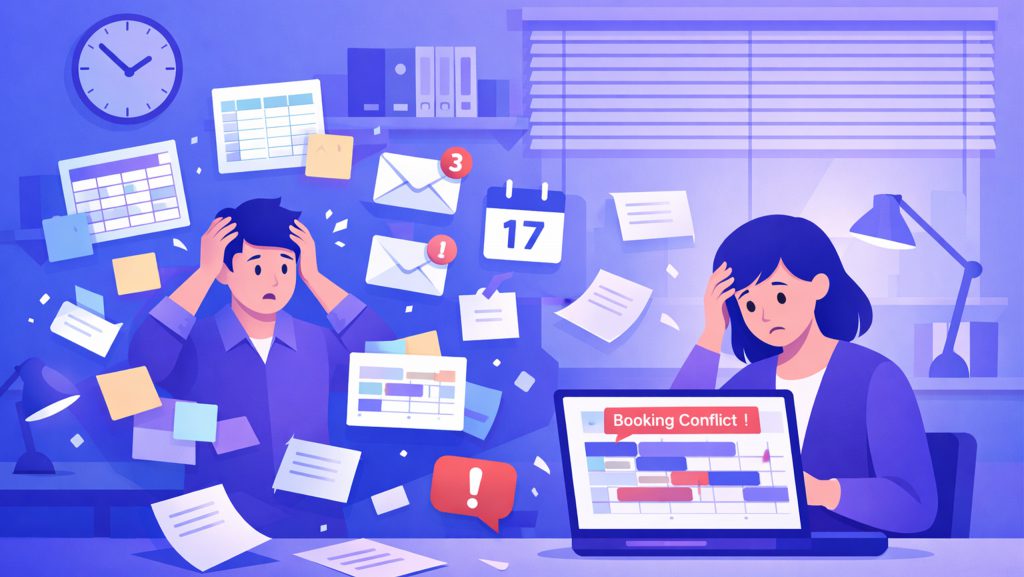
When Processes Built for a Smaller Business Meet a Larger One
Every agency begins with a version of the same operational setup. Talent information lives in a spreadsheet. Bookings are managed through a shared calendar or, more informally, through a chain of messages. Approvals move via email. Invoices are raised manually and followed up on when someone remembers to do so.
At a small scale, these approaches are not inherently problematic. The team is close enough to compensate for gaps in process. Information is accessible because very few people need to access it.
The difficulty arises when the business grows and those same processes are expected to carry significantly more weight. At that point, the informal, manual approach that once felt agile begins to create friction at every level of the operation, and the costs, both visible and hidden, begin to accumulate.
Booking Conflicts as a Structural Symptom
Double-booking is one of the most operationally damaging events in a talent agency, and one of the most preventable – provided availability is managed through a system that reflects reality in real time.
When availability data lives across multiple spreadsheets, is updated by different members of the team at different intervals, and is not synchronized to a single source of truth, booking conflicts become an inevitability rather than an anomaly. The conflict surfaces only when it is too late to resolve cleanly.
The Problem With Talent Data That Has No Single Home
In agencies managing a substantial roster, talent information tends to accumulate in fragments across multiple locations. Portfolio materials in one folder. Rate information in a spreadsheet that may or may not reflect the most recent update. Contract history accessible only to the person who handled the original booking. Contact details distributed across individual email accounts rather than centralized in any shared system.
This fragmentation creates two distinct problems. The first is efficiency – time is spent locating, cross-referencing, and verifying information that should be immediately accessible. The second is accuracy – when multiple versions of the same data exist in different places, the likelihood of errors in client-facing communications increases significantly. Over time, the team loses confidence in the data itself. What should be a straightforward operational function becomes a source of ongoing friction.
Slow Approvals and Delayed Invoices
In agencies operating without structured workflows, the approval process for contracts, bookings, and invoices tends to function as an informal chain of requests and follow-ups. Invoices are delayed not because of negligence but because the information required to raise them accurately is not readily available at the point it is needed. The operational impact is measurable. Jobs stall at approval stages because there is no defined process for moving them forward efficiently.
When the Team Becomes the System
Perhaps the most consequential and least discussed symptom of operational overload is what it does to the people responsible for running the agency’s core functions.
When coordinators, account managers, and bookers spend a disproportionate portion of their time on data entry, manual updates, and administrative follow-ups, the agency is effectively redirecting skilled resources away from the work that generates value. The strategic, relational, and creative dimensions of their roles – building talent relationships, developing client partnerships, identifying opportunities – are crowded out by operational maintenance.
This creates a compounding problem. The business needs its most capable people focused on growth-generating activity. Instead, they are absorbed by process administration that scales with the size of the roster rather than with the sophistication of the systems supporting it.
The Structural Ceiling of Manual Operations
It is worth being direct about what sustained manual operations cost a growing agency.
Delayed invoices represent revenue that is outstanding longer than it needs to be. Booking conflicts carry the risk of client attrition. Administrative overload reduces the productivity of the team across functions that directly affect business performance. And beyond the day-to-day costs, there is a structural constraint: manual processes impose a ceiling on how much complexity the agency can manage at any given time.
Building the Infrastructure That Growth Demands
StarAgent was designed to address the precise operational challenges that talent agencies encounter as they scale.
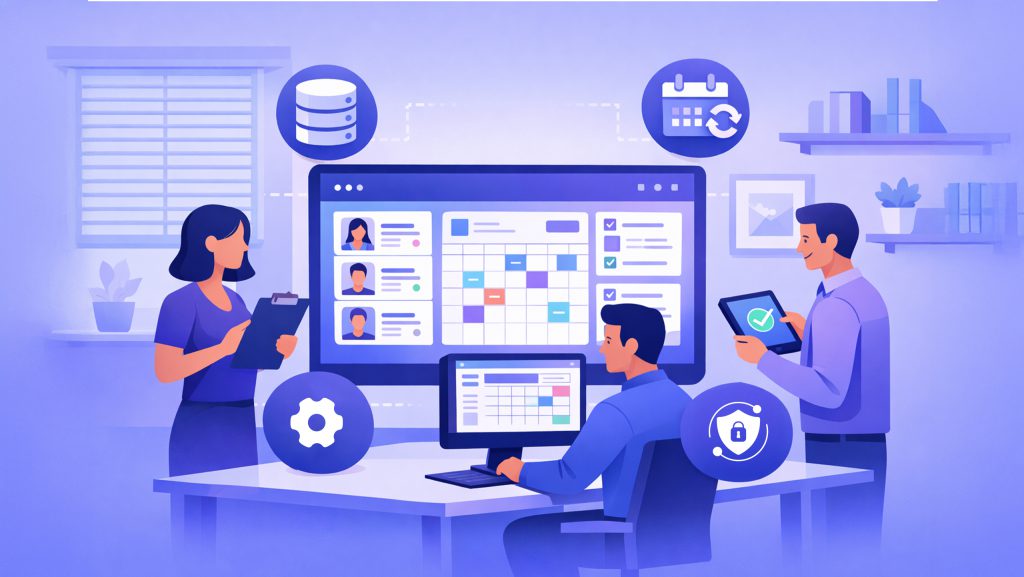
The platform provides a centralized talent management system that eliminates the fragmentation of data across spreadsheets and shared drives, replacing it with a single, structured database that the entire team can rely on. Availability tracking and calendar synchronization ensure that booking decisions are made with accurate, real-time information. Structured workflows bring consistency to the approval and communication process, reducing the administrative overhead that accumulates when these functions are managed manually. Role-based access ensures that the right people have access to the right information, without the data integrity issues that arise from unrestricted, unmanaged access.
The result is an operation that is capable of absorbing growth without the friction, errors, and inefficiencies that characterize agencies still dependent on manual process management.
Getting Ahead of the Problem
Agencies do not always stall because of a shortage of talent, ambition, or opportunity. They often fall short because the operational infrastructure supporting the business was built for an earlier, simpler version of it, and was never redesigned to match the scale the business eventually reached.
Addressing these issues is not a matter of working harder or adding headcount. It is a matter of building systems that are capable of carrying the weight of a genuinely scaling agency.
If your agency has reached the point where manual processes are limiting what you can deliver, StarAgent is where that changes. See how it works
Share on facebook
Share on twitter
Share on whatsapp
Share on linkedin

Better talent management
starts here
Menu
Menu